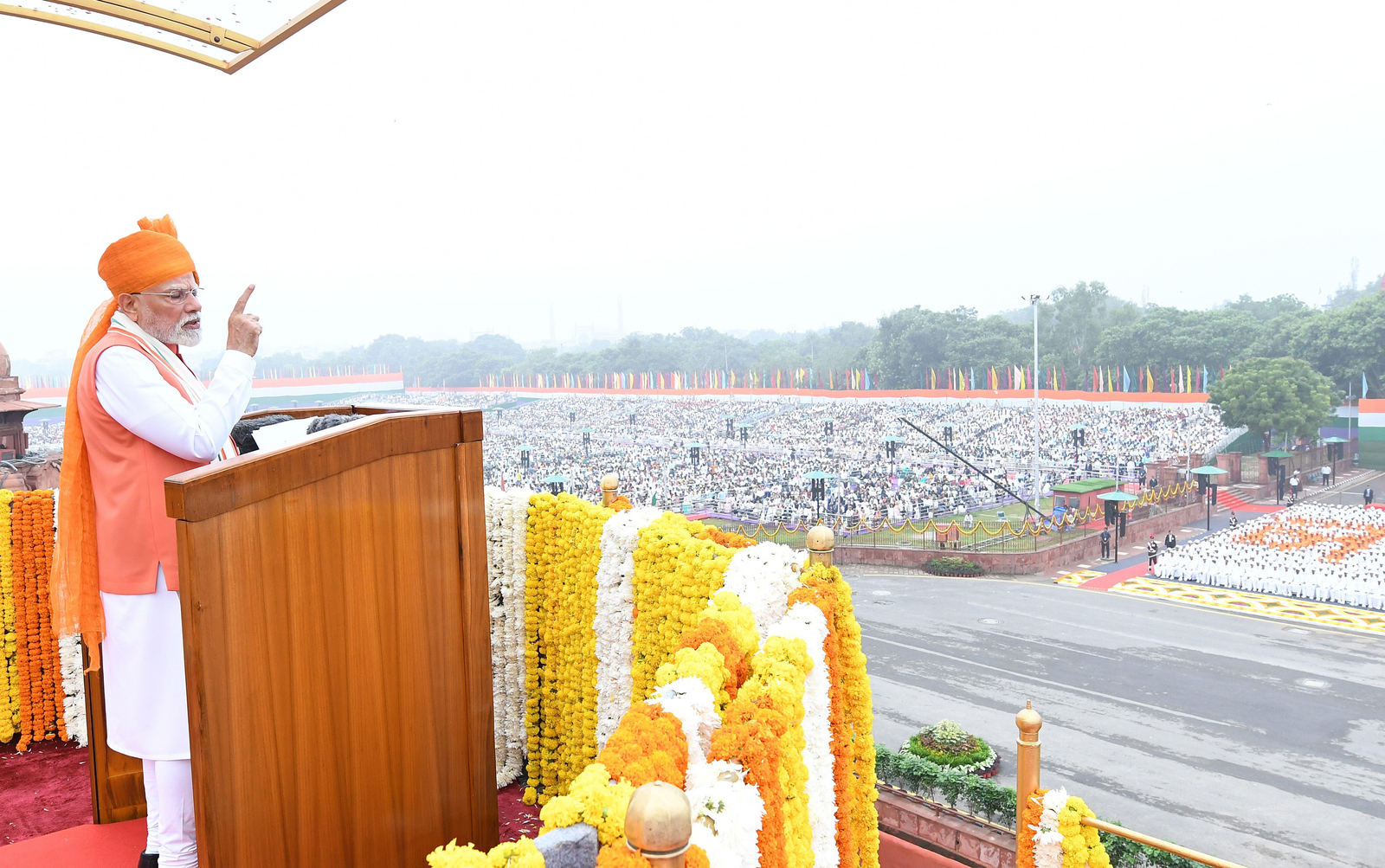
New Delhi, August 15, 2026: India today celebrates its 80th Independence Day, marking eight decades of freedom and a remarkable journey from a newly independent nation to an increasingly confident and influential global power.

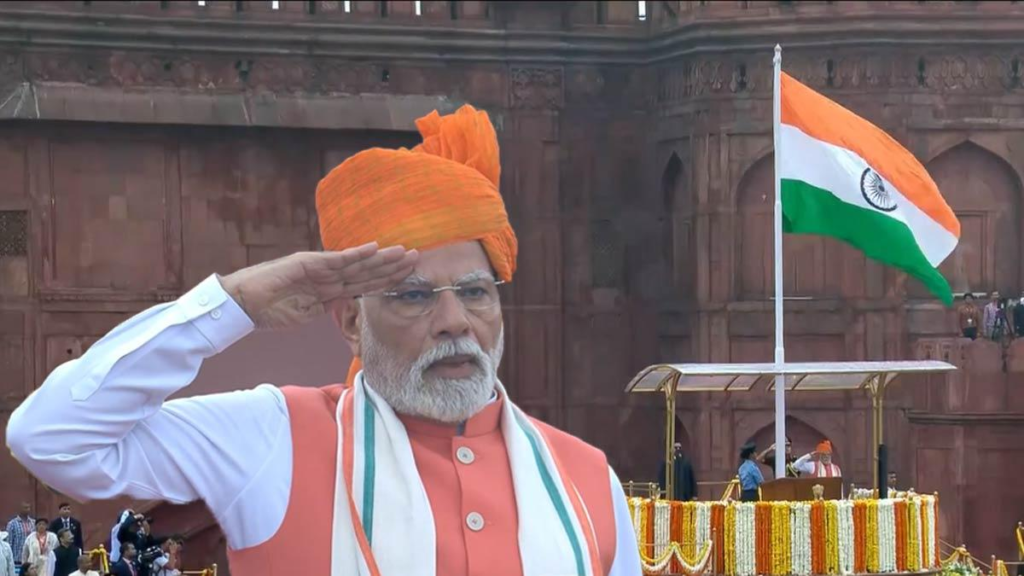
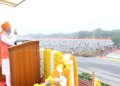
Addressing the nation from the historic ramparts of the Red Fort, Prime Minister Shri Narendra Modi presented a forward-looking vision for India, placing the focus on Viksit Bharat by 2047, self-reliance, youth power, technological advancement, manufacturing, energy security and national strength.
The Prime Minister’s address combined a reflection on India’s achievements with a call for greater ambition and collective effort. He emphasized that the next phase of India’s development requires a transformation in the country’s work culture, thinking and scale of ambition.
Viksit Bharat 2047: The Central Vision
One of the strongest messages from the Red Fort was the determination to make India a developed nation by 2047, when the country completes 100 years of independence.
Prime Minister Modi called for citizens, governments, industry, farmers, youth and every section of society to work together toward this national objective. The emphasis was not merely on economic growth but on building an India that is self-reliant, technologically advanced, secure, prosperous and globally respected.
The 80th Independence Day therefore becomes an important milestone between the achievements of the past and the aspirations of India’s next generation.
Twelve Years of Transformation
A significant portion of the Prime Minister’s message focused on India’s transformation over the last 12 years.
According to the Prime Minister’s Office, the areas highlighted include manufacturing, digital infrastructure, basic amenities, energy security, youth empowerment, innovation and social security.
The transformation represents an effort to move India from an economy with significant development challenges toward a country capable of competing at a much larger global scale.
Manufacturing and Atmanirbhar Bharat
Self-reliance and domestic manufacturing remain important pillars of the Modi government’s development strategy.
The Prime Minister’s Independence Day message emphasized expanding India’s manufacturing capabilities and strengthening domestic production. The broader objective is to make India a major manufacturing hub while reducing excessive dependence on imports.
Electronics, defence production, semiconductors, railways and other strategic sectors have increasingly become part of India’s self-reliance agenda.
The message of “Vocal for Local” and the wider Atmanirbhar Bharat approach seeks to encourage Indian businesses, manufacturers and consumers to contribute to a stronger domestic economic ecosystem.
Digital India and Technological Growth
India’s digital transformation has been another defining feature of the past decade.
Digital public infrastructure, digital payments and technology-enabled government services have fundamentally changed how citizens interact with financial and public systems.
The Prime Minister’s focus on technology has now moved toward the next frontier: artificial intelligence, semiconductors and advanced technologies.
On the 80th Independence Day, he announced a major initiative to provide AI training to one crore young Indians within one year, reflecting the government’s emphasis on preparing India’s youth for the technology-driven global economy.
Youth Power: India’s Greatest Strength
The theme of Yuva Shakti occupied an important place in this year’s Independence Day message.
With India possessing one of the world’s largest young populations, the Prime Minister presented young Indians as central participants in the country’s journey toward Viksit Bharat.
Along with AI training, the Prime Minister announced measures including a free online coaching network for competitive examinations and a nationwide sports talent hunt for children aged 5–15.
The underlying message was clear: India’s future will be determined by the skills, creativity, discipline and ambition of its young generation.
Energy Security and Nuclear Power
Energy security was another major priority highlighted from the Red Fort.
India has set an ambitious target of achieving 100 GW of nuclear power capacity by 2047, with five new nuclear reactors planned within the current decade.
The emphasis on nuclear energy, domestic resources and technological capability reflects the importance of reliable and affordable energy for India’s long-term economic expansion.
A growing economy requires a strong energy foundation—and India’s future development strategy increasingly treats energy security as a component of national security.
Semiconductor Mission and Strategic Technology
Semiconductors have emerged as one of the most strategically important technologies in the modern global economy.
Prime Minister Modi highlighted plans for additional semiconductor plants as part of India’s drive toward technological self-reliance.
The development of domestic semiconductor capabilities could strengthen India’s position in electronics, telecommunications, automobiles, defence, artificial intelligence and other advanced industries.
This represents a significant shift in India’s development aspirations—from being primarily a consumer of advanced technology to becoming a designer, manufacturer and exporter of technology.
Social Development and the Common Citizen
India’s growth story has also included a strong focus on basic amenities and social security.
The government has highlighted improvements in areas such as housing, sanitation, drinking water, financial inclusion, electricity and welfare delivery.
The broader objective is to ensure that economic progress reaches ordinary citizens and that development is reflected in improvements in everyday life.
This combination of economic expansion and social development forms an important part of the government’s narrative of Sabka Saath, Sabka Vikas.
India’s Rising Confidence
Over the past decade, India has increasingly projected itself as a country capable of taking independent decisions and contributing to global affairs.
The Modi government’s emphasis on manufacturing, technology, defence capabilities, energy security and international engagement has accompanied a broader effort to strengthen India’s position in the global economy.
The Prime Minister’s Independence Day message reinforced this confidence by urging Indians to think bigger and work with greater determination toward national goals.
National Security and Self-Reliance
National security was also a significant component of the Prime Minister’s address.
The development of domestic defence manufacturing has been presented as an important element of Atmanirbhar Bharat. Greater indigenous capability in defence is intended not only to reduce import dependence but also to create domestic technology, manufacturing and employment opportunities.
The Prime Minister also spoke strongly about combating threats to India’s internal security and maintaining national unity.
From the Achievements of Today to the India of Tomorrow
The 80th Independence Day carries a special significance because India is now looking beyond the traditional idea of development.
The aspiration is no longer simply to become a larger economy. The vision articulated by Prime Minister Modi is of an India that is developed, self-reliant, technologically capable, socially secure, economically strong and globally influential.
The Prime Minister’s special contribution to this development narrative has been his effort to place these ambitions at the centre of national discourse and government policy.
From Digital India and Make in India to Atmanirbhar Bharat, infrastructure expansion, youth empowerment, manufacturing, technology and Viksit Bharat 2047, these themes have shaped the country’s development agenda during his tenure.
At the same time, India’s progress remains the collective achievement of its citizens, entrepreneurs, scientists, farmers, workers, armed forces, public servants and successive governments. The next stage will require continued participation from every section of society.
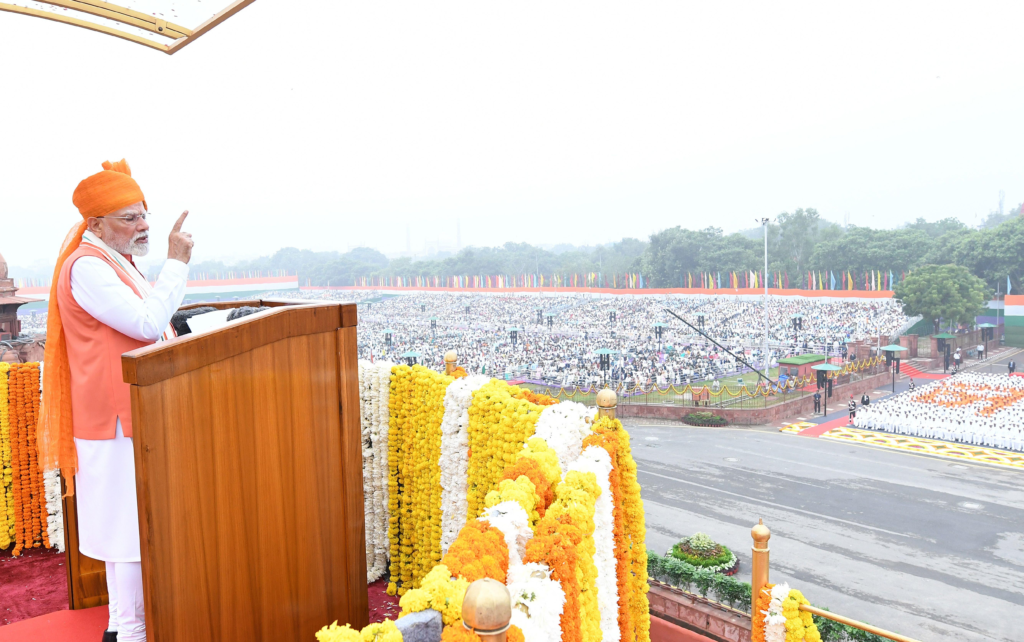
A Call to Build the India of 2047
The message from the Red Fort on the 80th Independence Day was ultimately a message of confidence and responsibility.
India has travelled a long distance in 80 years. But according to the vision outlined by Prime Minister Modi, the most important chapter is still ahead.
The target of Viksit Bharat 2047 gives the country a clear long-term destination. The challenge now is to convert ambition into sustained action—through innovation, entrepreneurship, education, manufacturing, technology, social development and national unity.
As India looks toward its centenary of independence, the question is no longer only what the country has achieved.